Your home. Organized.™ Your move. Easier.™
Serving the entire San Francisco Bay Area | Gayle Grace, 510-654-7983

Showing posts with label portfolio - get organized. Show all posts

Wednesday, March 30, 2011

Can EVERYONE be organized?

Recently one of my ATH facebook followers posed this question:  "Can everyone be organized?  My husband seems like a lost cause to me..."

I've been pondering that question, because I use to think that everyone could be organized.  After 20 years as a professional organizer, I now understand that while every space can be organized and made more efficient, and certainly everyone can benefit by having a a more organized space, not everyone responds to getting organized.

There can be many reasons for this...some people are inordinately resistant to change, some people have abundance issues and must be surrounded by a mountain of stuff, some people have serious disorders such as hoarding.  Some people already consider themselves organized - it just doesn't look that way to someone else.  Author David Allen has said "Everyone is already organized to the degree they need to be, to have the world match up to their internal standards. And usually “having to get organized” refers only to things they don’t care that much about. In other words, oil painters have their brushes organized, fishermen their tackle boxes, golfers their clubs."

Recognizing that not everyone's personal definition of being organized is the same, is a level of maturity that the veteran professional organizer brings to the table. There's no amount of trying to convince someone that they need to get organized if they don't think so!

Take this test:  which of these spaces looks organized to you?

A

B

If you choose A, don't call me, I can't help you!

Wednesday, February 16, 2011

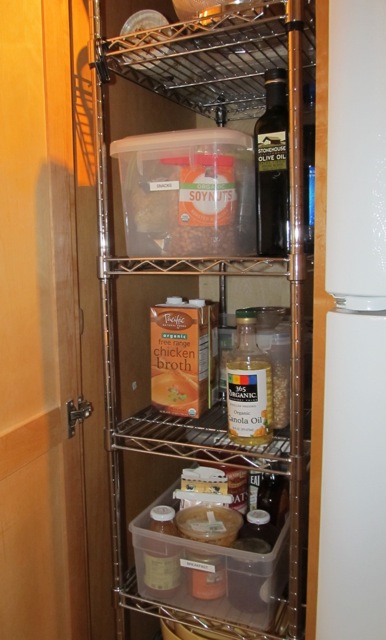
Pantries I have known...

As a bay area professional organizer, I get to work on a lot of kitchen pantries.  It's one of my favorite things.  Every kitchen has its challenges and it's the opportunity to solve those issues for a family that is so exciting.

Pantries often suffer from over crowding, lack of organizing supplies, misplacement of type of item, failure to discard the old items, too many people accessing without know where things should go.

Here are some pantries I've worked on over the years...

BEFORE
 AFTER


BEFORE
AFTER


BEFORE
 AFTER


BEFORE

AFTER


BEFORE
 AFTER

Wednesday, February 2, 2011

What's in your pantry...


February is "Organize Your Pantry" month, at least according to me.  I decided this when I went to make chili and pulled out a can of tomatoes that expired in 09...how is this possible?

Those expiration dates often come as a surprise to my organizing clients as well.  I can't tell you how many cans I have had to pry off the back of pantry shelves, as they leaked their contents from 1982.  It's so easy to push cans and bottles to the back of the shelf when you bring home supplies are in a hurry to get them off the kitchen counter.

So, let's just take a look at what is going on in our pantries this month.  Even if you just do one shelf at a time, by the end of the month you will probably have a pretty good looking pantry.

Getting started:  pick a shelf and pull everything out, check the dates, check the condition of the contents - are cans bulging? Do you still recognize the contents of what's in the jars?  Will you ever use that one can of coconut milk you bought on a whim...

Now is a good time to wipe down those sticky shelves and maybe even change the contact paper.

Group like things together, soups with soups, veggies with veggies, etc. Bin like items - think peanut butter and jelly or beans and rice.


Use airtight containers to hold items that go stale, like crackers, cookies and cereals.  

Wednesday, December 15, 2010

A beautiful kitchen unpacked...

Last week we unpacked and organized this beautifully remodeled kitchen...


Mom and baby enjoying the activity of moving...


Within hours, everything is in it's place...


And the kitchen is ready to go...


Shouldn't all moves go this smoothly?  Here are some tips from a professional organizer on unpacking a kitchen...

1.  Decide in advance where in the kitchen your items should go... keep dishes and glassware near the dishwasher.

2.  Unpack the items that are easiest to put away first.  Generally, that dishes and glassware.

3.  Try not to have "too many cooks" in the kitchen at the same time madly unpacking boxes and shoving things into drawers and cabinets.

4.  Keep items you use most often closer at hand.  

5.  Remove packing paper and boxes from the area as soon as you unpack each box.  Keeping the area tidy will make it feel more in control.  

6.  Be sure and smooth out all packing paper so you are sure you didn't accidentally miss something from a box.  

Wednesday, November 10, 2010

Red or white...

How many wine glasses does one person need?  Recently, I organized a client's kitchen, and in the process, we removed dozens and dozens of wine glasses from the cabinets.  My client was amazed to see how many wine glasses he had accumulated over a few years.  They were tucked into every corner of every cabinet, mostly coated with dust.


How does this happen?  A couple of parties and before you know it, you are the owner of dozens of wine glasses.  And especially in California, you're suppose to have glasses for every kind of wine you might serve...white, red, rose, dessert, sparkling, port, etc.


So, how do you decide how many is too many?  How much space for storing glasses do you have?  How often are you going to use all the glasses?  Can you use a "generic" glass and serve whatever wine in them?  Can you borrow glasses from a friend if you needed to?  All these are questions you have to answer when you are deciding how much glassware you want to own.  

Personally, I have 4 red, 4 white and 4 champagne glasses.  That covers the maximum number of sit down guests I can fit into my condo.  If I have more people, I borrow glassware from a neighbor.  

When we put my client's kitchen back together, this is how many glasses he decided to keep.


Here's a great article about choosing wine glasses from The Wine Doctor:

"I suspect most wine drinkers could quite adequately get by with just two or three different types of wine glasses. I would suggest as starting point the three types of wine glasses mentioned above - a standard glass for whites, something a little larger, perhaps, for reds, and of course a flute or similar style for Champagne or sparkling wine." 

Wednesday, October 13, 2010

Life happens...

Last month, my cat, Littleone, was diagnosed with Diabetes.  This has meant bringing into the house a whole new set of treatment supplies:  needles, insulin, testing kits, etc.   In order to fit these things in, some reorganizing had to take place.

As it happens, the easiest place to give her shots is in the kitchen, so now some of my precious kitchen drawer space has to be turned over to her medical supplies.  So, I went to work rearranging a drawer... not so bad, actually.


In August, I worked with a client whose child has severe allergies, and we decided to set up an allergy medication station in the kitchen pantry.  Right there with dog biscuits, is everything they need to treat a reaction.  We chose that spot because it's most likely to be the central location where everyone can access medications in an emergency.  We also duplicated this station on the 2nd floor and a mini station in the car.  (Note that this photo was taken before we labeled the boxes.)  


If you find that you need to set up a medical station, decide where the most likely places are that treatment will take place.  Empty an accessible drawer or shelf and set up your station.   Be sure everyone in the house knows where the medications are, can reach and manage them, and how to use them.  Label your boxes, drawers or shelves accordingly.  

Wednesday, July 28, 2010

Under the kitchen sink...

One of the areas that is most likely to be "out of sorts" in a home is under the kitchen sink.  It's a tough area to organize for most people because it is usually just a large cavernous space, often with the garbage disposal and lots of pipes to get in the way.  

Even though this person tried to bring in an organizing tool - the double decker baskets - they are overflowing and difficult to get to.

It's definitely not a good idea to keep your cutting boards under the sink, and certainly not around cleaning products.


Clearly, this cabinet has too much stuff in it. 

The fix?  Start by taking EVERYTHING out and sorting by what is REALLY needed directly under the sink.  Usually, it's anything to do with washing dishes, cleaning the kitchen and sometimes a garbage pail.  If you have room, recycling can go there too, but that's often asking a lot of this space.

Using the double decker baskets in a different direction helped make everything more accessible.


Here we used a plastic box and a caddy to keep cleaning supplies easy to use.


Using a plastic bin under the sink also helps keep things from spilling on the cabinets surface and staining it, as well as collecting any leaks from the pipes that may occur.

Wednesday, July 14, 2010

Turntables

I love using turntables in kitchen cabinets.  Especially in upper cabinets, corner cabinets and other places that are hard to reach.  


One of favorite uses for turntables is in liquor cabinets.  But anytime you have bottles of like things you need to reach, a turntable can be the solution.


Wednesday, May 26, 2010

Accessory pantry redo...

A couple of weeks ago, I had the pleasure of working in a newly remodeled kitchen to organize all the cabinets.  Generally, the long deep set of cabinets in a kitchen are used as a "pantry" for food storage, but this pantry was used to house stemware, vases, decorating accessories and a bunch of other things that really didn't belong there.


Often, cabinets become "junk" areas just because we have something to put away, we don't know where it should go, so we open the first accessible cabinet and just shove the items in.

This cabinet was housing candles, which had melted onto the shelving over time, and breakables, which were doing just that - getting broken...


We took the cabinet apart, separated the items, purged what was no longer needed or usable.  We then containerized the small items and put the pantry back together again...


Now everything is safe, accessible, and organized.

Wednesday, May 12, 2010

Junky junk drawers


Many of us have at least one drawer in the house, usually in the kitchen, that we call the "junk drawer". Unfortunately, that's exactly what it usually contains! Keeping a drawer like this defeats even the original purpose of a junk drawer - to house miscellaneous items, that are needed from time to time, not keeping a mishmash of stuff that you will never need again.

Do you recognize these drawers?  If you do, you've got some work to do - sort, purge, add dividers to the drawers and keep only those things that will actually be useful.


And here's a an organized "junk drawer"...

Wednesday, May 5, 2010

Corner cabinets

Q:  We just bought a new house and while I was thrilled with all the cabinets in the kitchen, I am now stuck on the best use of our corner cabinet with a turn table.  What should I put in there?

A:  Corner cabinets can be challenging.  I can tell you that you don't want to house food or small loose items and definitely not glassware on something that spins.   I've been successful when I use the turn table type cabinet for small appliances and their accessories.  Sometimes pots and pans can housed there as well.    See my photos below...


Wednesday, April 21, 2010

Laundry room redo

My client was tired of tripping over pails, mops and miscellaneous stuff which had gathered in her tiny laundry area over the years.  So, I went about designing an Elfa closet from The Container Store.


We took everything out of the space and had the handyman remove the shelving system that had been installed years before.  We sorted the useful items from those things that don't belong in the space in the first place, and discarded the old and unused.  The space is tricky because a stacked washer/dryer has to have room to open the doors and be accessed for use.


The completed space - which now allows for cleaning products, supplies and equipment to be housed within reach, and yet has plenty of room to access the machines.  The client is now looking forward to laundry day and we can see why! 


Wednesday, February 24, 2010

Organizing strategies


As I have been prepping for my organizing workshop tomorrow, I've come up with some basic organizing strategies that I use to get people organized.

1. Keep like things together. Think peanut butter and jelly, toothpaste and toothbrushes, and hammers and nails.

2. New things in, old things out. Whenever you find your self at the check out counter, be asking yourself - where will this go and what things will leave to make room for these?

3. Limit room functions. A bedroom is a place of rest and relaxation. It also can be the place you dress, but adding a TV, a library and an office is just too much for one room to handle.

4. Label it. Putting labels on boxes, bins, shelves or cabinets gives everyone in the family the opportunity to know where things live. The bread goes in this box - BREAD.

5. Zone it. Create areas where like things are kept together. Kitchens are a natural for creating zones - the baking zone, the pantry/food zone, the pet zone, etc.

Wednesday, October 28, 2009

A spare room spared

My clients had always envisioned turning their now grown son's room into a guest/crafts area. But, as so often happens, the room never quite got there. Instead, it became the "catch all" room where everything landed in a heap. Month after month went by and the room just got more and more cluttered. Finally, they just closed the door and left it.


This spring, they decided they had to take action and called me for help. I met with them and devised a plan for getting the room cleared out. We started by sorting items into groups of what would be kept, what would be donated and what would be discarded.


Several years earlier they had an architect make a drawing for creating a wall to wall bookcase/craft area and their goal was to finally build it in the room. After our sorting sessions, the keep boxes were moved to the garage and the construction on the space went forward. The new desk/bookcase/craft table was built, the carpet replaced and the room painted. Then we brought back the boxes of items that would remain in the room and assigned them their new places.


The end result is a lovely space that can now be used for sewing projects, reading and keeping a guest comfortable during short stays.


Related Posts with Thumbnails